


Easy Run Mistakes That Are Costing Tactical Athletes Their Aerobic Base
- May 9
- 5 min read
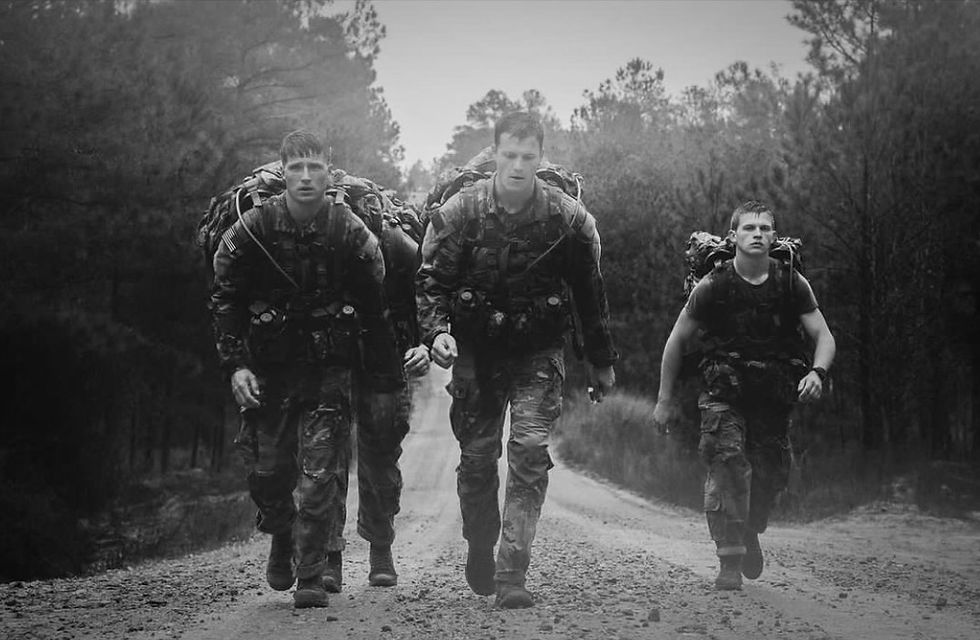
Most tactical athletes go hard with training. Grind through intervals, chase a pump, and lay on the floor sweaty, sore, and fatigued. Feeling tired? Yes. Productive? Not too sure. But that's a topic for another day. Ask those same tactical athletes about easy runs, and that's where the wheels fall off. Both literally and figuratively.
Easy runs aren't a warmup. They aren't junk miles. They aren't what you do when you don't feel like training hard. Done right, they are the foundation everything else is built on. Done wrong, they are the reason your engine never actually grows. The biggest culprit is the “go hard, or go home” mentality. As important as easy miles are, we can’t take the same approach we bring to our other conditioning or strength training.
Six common easy run mistakes tactical athletes make that sabotage their aerobic base, and what to do instead.
1. Running on pace instead of effort
Your easy run pace is not the point.
Say it again. Your pace on easy days does not matter. What matters is the effort and that effort should be low, or EASY! Intermittent nasal breathing. Conversational pace without gasping. If you cannot hold a sentence without stopping to catch your breath, you are running too hard.
The trap we fall into most is treating easy runs as a performance test. Check the split, see a slow pace, and pick it up. Our pride and ego can’t handle it. That is exactly backwards. Your easy pace will naturally improve as you accumulate time on feet and your aerobic system adapts. Chase the effort, not the number. The number will follow.
If you just cannot slow down, that is information. It means your ego is running the session, not your engine.
2. Too much pride to walk
Walking is not failure. Walking is a strategy, especially in the beginning.
If you hit a hill, if you are hyperventilating, if you cannot maintain easy effort - walk. Recover. Then run again. The goal of an easy run is to accumulate aerobic work at low intensity, not to prove you can suffer through any run without stopping.
Your other sessions during the week cover hard training. Speed and intensity are already accounted for. Easy days exist specifically so you are recovered enough to actually go fast when it counts. If your easy run beats you up, you are robbing your hard sessions of the quality they need.
Walking to stay in the right effort zone is smarter than bulldozing through the wrong one.
3. Overthinking everything
Running shoes. Cadence. Foot strike. Breathing mechanics. Heart rate zones.
These things are earned with mileage, not researched before you have put in the work. Your body is remarkably good at figuring out efficient movement patterns on its own, given enough practice and enough time. The chronic over-thinker never gives it that chance.
The simplest advice: just run (with the caveat of having a good plan. See Running base building for some strategies and tactics). Practice the skill. Show up consistently and let adaptation do its job. Your times, your form, and your relationship with running will all improve. Not because you optimized every variable, but because you did the work long enough to let your body sort it out.
Get out of your own way.
4. Training your watch instead of your aerobic base
Your internal monitor is the most important tool you own. Not your Garmin.
There is a difference between being data-informed and being data-obsessed. Data-informed athletes use objective information to understand what happened after a session. Data-obsessed athletes cannot take a step without checking their wrist and over time, they lose the ability to regulate their internal monitor without external feedback.
Here are ten signs you are training your Garmin instead of your engine:
You check your heart rate every three steps
You feel anxious running without a watch or HR strap
You break your neck looking at every mile split
You allow the watch to tell you to speed up or slow down based on an arbitrary split
You cannot identify what easy, moderate, and hard actually feel like
You care what Garmin estimates your VO2 max to be
The time-in-zones rating makes or breaks your session
You spend twenty minutes troubleshooting a malfunctioning watch instead of just running
You think a newer, more expensive model will give you a faster run time
You run to post the distance (but hide the pace)
Recommendation: Run your easy efforts blind. No HR checks mid-run. No pace alerts. Debrief with the data afterward. This is how you develop pacing as a skill and pacing is a skill worth having, especially when it comes to test day. Want to see how we dial in our 2-mile? Check out the pacing strategies in How to Pace Your 2-Mile.
5. Confusing easy with effortless
Easy is not effortless. There is a difference.
Easy means a 4-5 out of 10 effort. Legs might be heavy. Fatigue will accumulate across a training block. Some days easy will feel harder than others, and that is normal. The intent is to keep the intensity low - not effortless.
The best way to calibrate easy is to contrast it against your hardest sessions. On a true hard effort, your heart rate is screaming, your legs are on fire, and you are gasping. Easy is the deliberate opposite of that.
Intermittent nasal breathing. Conversational pace. The kind where you could pull up your notes app, use voice to text, and not sound like you are being held against your will.
Give easy runs respect. They are important work. You will feel better when you finish than when you started and that is the signal you got it right.
6. Starting without a baseline
If you do not know where you started, you cannot prove you improved.
Before you build your easy run progression, run a 20 to 30 minute easy assessment. Keep the effort honest. Track four things:
Distance covered - how far did you go at true easy effort?
HR data - what did your average and peak heart rate look like?
HR recovery - how long did it take to drop below 120 bpm after you stopped?
Subjective measures - how did it feel? Energy level, leg heaviness, breathing comfort?
Retest at 8 to 12 weeks. The numbers will tell the story. More distance at the same effort, faster HR recovery, lower average HR at the same pace. That is your engine growing.
Without the baseline, progress is invisible. With it, you have proof.
The Bottom Line
Easy runs are not extra. They are not optional. They are not what you do when you do not feel like training hard.
They are how you build the engine that makes every other session possible. The tactical athlete who masters easy running builds a base that holds up under rucking, sprinting, stress, and sleep deprivation. The one who skips it or does it wrong just gets heavier and slower.
Build your easy mileage accordingly.


Comments